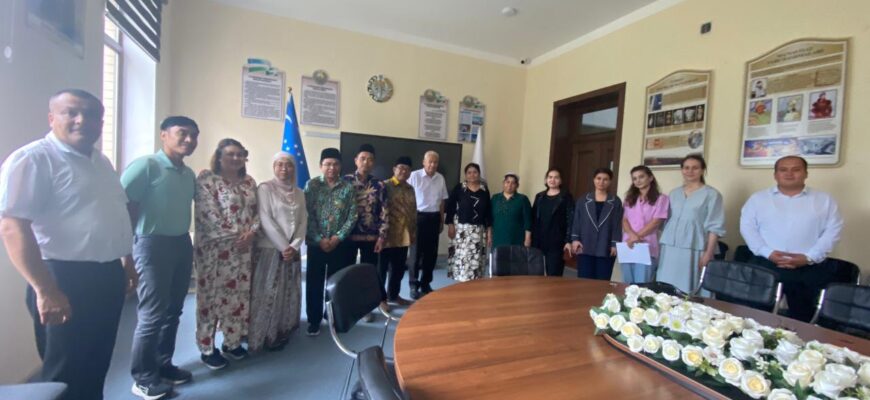
Kattakurgan, May 1 – The Department of Education at Kattakurgan State Pedagogical Institute organized a workshop on writing Q1 reputable international scientific articles in the field of social sciences. The event featured Prof. Dr. Khoirul Anwar from Universitas Muhammadiyah Gresik as the main speaker. This workshop became part of the academic collaboration between Universitas Muhammadiyah Gresik and Kattakurgan State Pedagogical Institute.
The activity took place in Kattakurgan, Uzbekistan, amid the growing demand for higher education institutions to strengthen international scientific publications. For universities, publishing in Q1 journals reflects the ability of lecturers and researchers to participate in global academic discussions, contribute theoretically, and demonstrate methodological credibility recognized by the international scholarly community. In his presentation, Prof. Khoirul emphasized that Q1/SSCI articles require more than just strong English writing skills. Manuscripts must demonstrate international relevance, theoretical contribution, methodological rigor, and a clear position within current academic debates.
The workshop was considered highly significant because social sciences are closely connected to issues such as social transformation, education, public policy, inequality, governance, and institutional change. These issues can become strong academic contributions when framed within appropriate scientific approaches. In this context, Kattakurgan State Pedagogical Institute holds strategic potential to develop educational and social research rooted in local experiences while still addressing global concerns.
During his presentation, Prof. Khoirul explained key strategies for publishing in reputable international journals. Researchers should begin with global issues, narrow the discussion into specific academic debates, identify limitations of previous studies, and formulate explicit research gaps. This approach aligns with the structure of Q1 journal introductions, which require authors to establish the research territory, identify gaps, and explain the contribution of the study logically.
He also highlighted the importance of an argumentative literature review. A literature review should not merely summarize previous studies. In Q1/SSCI standards, it must define the intellectual landscape, explain key concepts, synthesize findings, identify unresolved issues, and systematically construct theoretical frameworks or hypotheses.
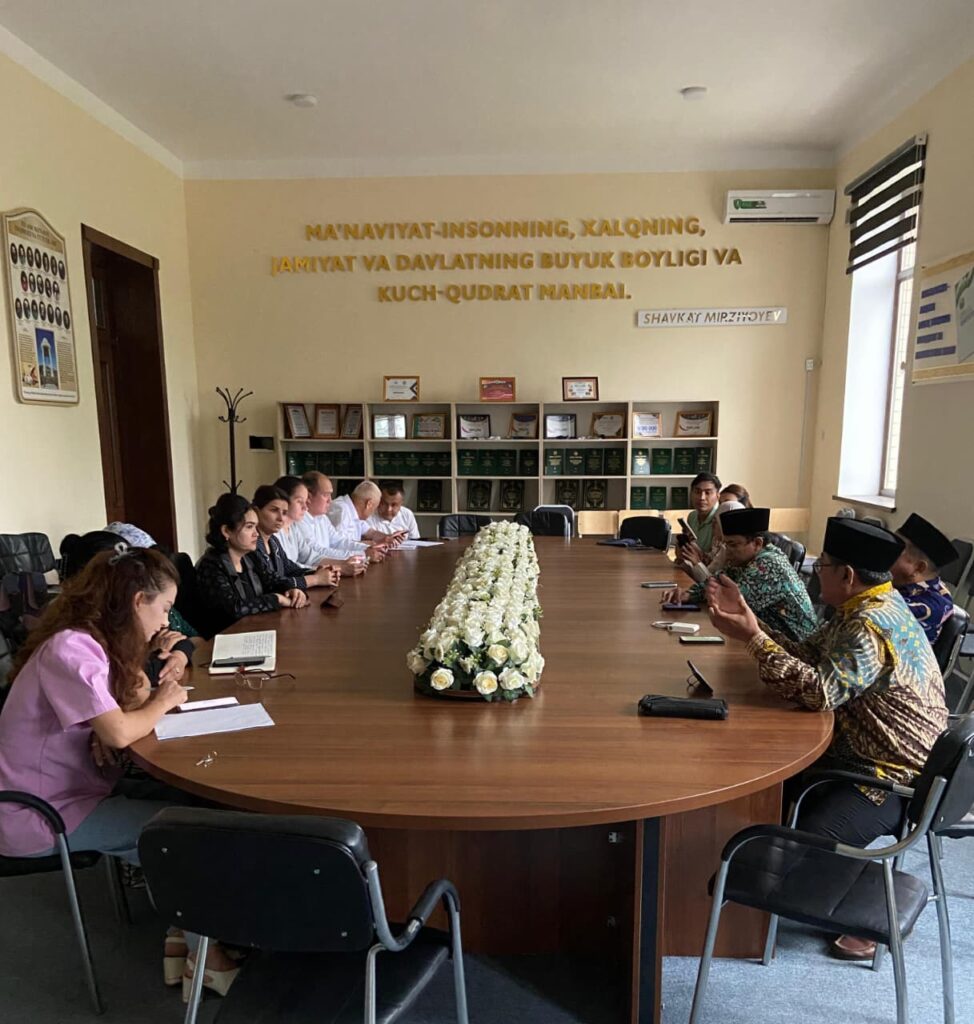
Methodology also received special attention. The methodology section was described as the backbone of a Q1/SSCI article. Researchers are expected not only to explain the research design, but also to justify every scientific decision, including design selection, data collection, instruments, analysis techniques, validity, reliability, ethics, and study limitations.
The strategies discussed were considered highly relevant for both institutions. For Universitas Muhammadiyah Gresik, the workshop expanded its international academic role through knowledge transfer, publication mentoring, and cross-country research collaboration. For Kattakurgan State Pedagogical Institute, the workshop opened opportunities to strengthen lecturers’ capacities in scientific writing, journal selection, academic argumentation, and collaborative research development. The institute, located in the Samarkand region of Uzbekistan, is recognized as a growing pedagogical institution that originated from the Kattakurgan Branch of Samarkand State University.
During the closing session, participants expressed their commitment to making the workshop a starting point rather than a one-time event. Ruziyeva Nasiba Kenjayevna, Head of the Department, emphasized the importance of follow-up initiatives such as strengthening research groups, preparing joint manuscripts, and providing mentoring until the journal submission stage. Sattorova Nafisa Isomiddinovna also expressed commitment to applying the writing strategies introduced during the workshop, particularly in constructing research gaps and strengthening article structures.
Other participants, including Shaxnoza Berdikulova and Zarina Murtozayeva, stated that the workshop provided practical direction for young lecturers and researchers in Kattakurgan. Both highlighted the importance of follow-up programs such as manuscript clinics, regular academic discussions, and collaborative research with UMG academics. Through these initiatives, the partnership between Universitas Muhammadiyah Gresik and Kattakurgan State Pedagogical Institute moves beyond formal agreements toward collaborative knowledge production.
This workshop marked a concrete step for both institutions in building international academic networks. Through collaboration in scientific article writing, both universities have the opportunity to strengthen academic reputation, increase reputable publications, and bring social science perspectives from Indonesia and Uzbekistan onto the global academic stage.