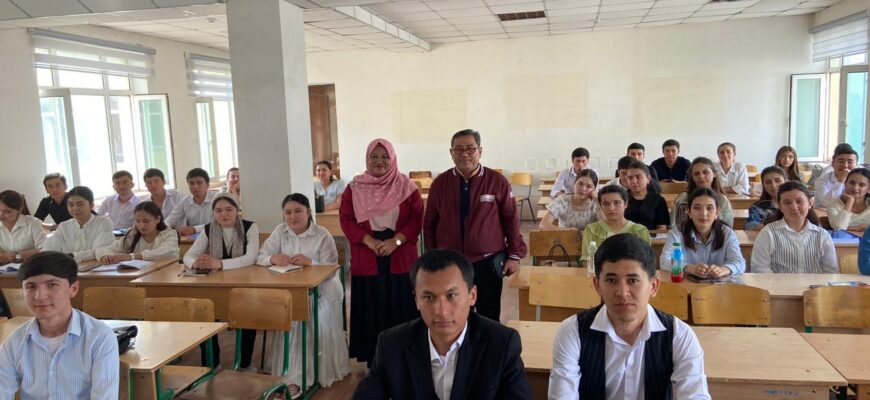
The academic space at Shahrisabz State Pedagogical Institute on Thursday, 30 April 2026, was not merely a formal meeting venue, but evolved into a cross-cultural dialogue space that brought together educational ideas from Indonesia and Uzbekistan.
The seminar and sharing session featured Universitas Muhammadiyah Gresik (UMG) as part of an ongoing academic collaboration between the two institutions. The forum served as a platform for exchanging ideas not only on education systems, but also on values, culture, and character formation within a global context.
In his presentation, Prof. Dr. Khoirul Anwar emphasized that education is always rooted in the cultural background of society. He explained that Gresik and Shahrisabz have different historical and social contexts, yet share a common respect for knowledge, teachers, and youth character development.
He also highlighted that today’s students live in an interconnected global environment, making it insufficient to rely solely on theoretical learning. Students need to understand how other societies think, value education, and construct cultural meaning in order to broaden their academic perspectives.
Meanwhile, Paulina, M.Pd., stressed that cultural values must be meaningfully integrated into the learning process. According to her, values such as discipline, politeness, collaboration, respect for educators, and social awareness become more impactful when experienced directly rather than only understood conceptually.
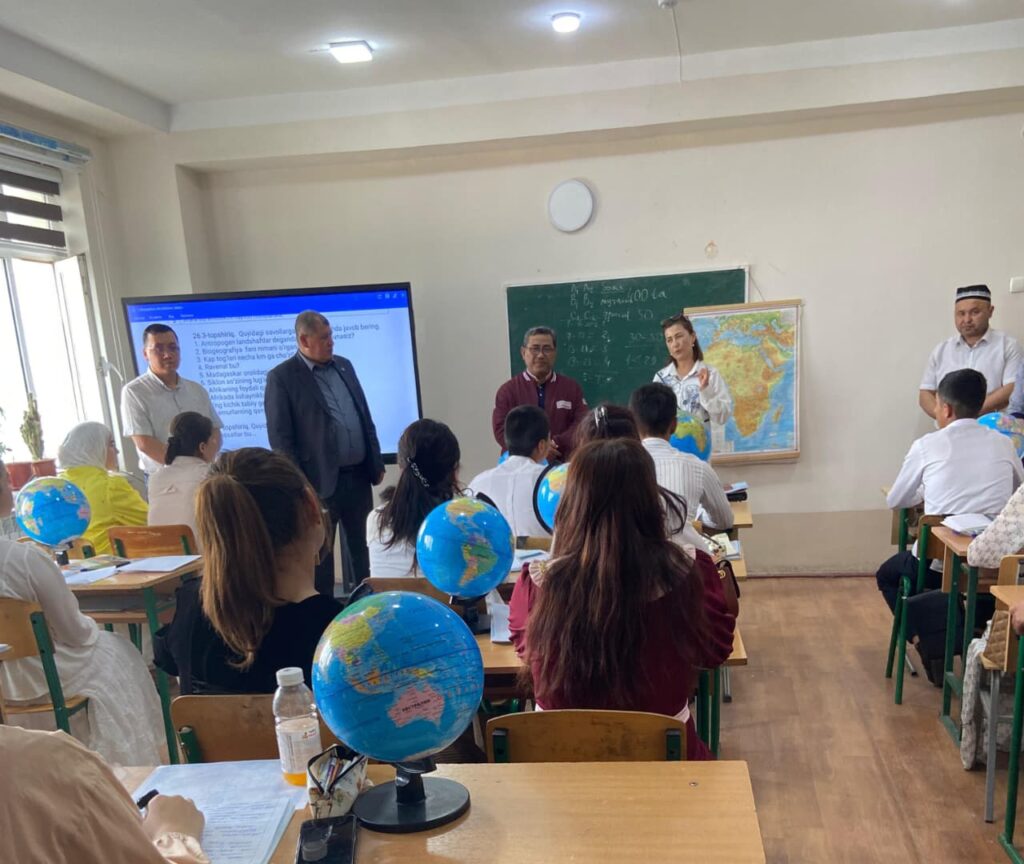
She further emphasized that cross-cultural education should help students understand the meaning behind traditions, not just their forms, in order to build empathy and a broader worldview in a global academic environment.
The discussion became more engaging as students from Shahrisabz State Pedagogical Institute related the material to their own experiences. They identified shared values between Gresik and Shahrisabz, particularly in terms of respect for knowledge, family, teachers, and religious-based social life.
One participant, Yusupxonova Munisa Zaxriddin, stated that the activity broadened her understanding of education, which is not limited to curriculum but also includes values that shape student behavior.
Another participant, Yuldasheva Dilrabo San’at, noted that the session helped Uzbek students better understand Indonesia, especially Gresik with its strong educational and cultural history.
Meanwhile, Tog‘aynazarova Farangiz O‘tkir viewed the activity as an important space for strengthening academic relations between Indonesian and Uzbek students through more open cultural dialogue.
Overall, the program not only facilitated academic exchange but also expanded perspectives on the relationship between education, culture, and character building in a global context.