
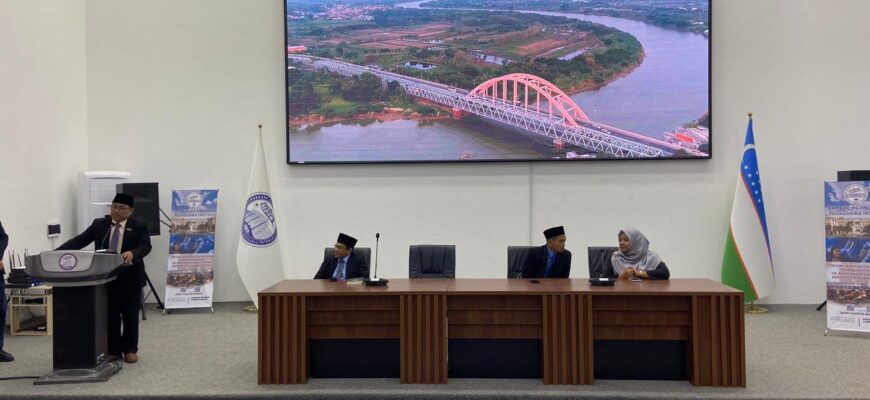
KATTAKURGAN, April 27, 2026 — More than just a formal seminar, the international forum held by Universitas Muhammadiyah Gresik (UMG) in collaboration with Kattakurgan State Pedagogical Institute (KSPI), Uzbekistan, became a meaningful space to discuss the future of higher education. Held directly in Kattakurgan, the event brought forward key issues shaping universities in today’s global landscape.
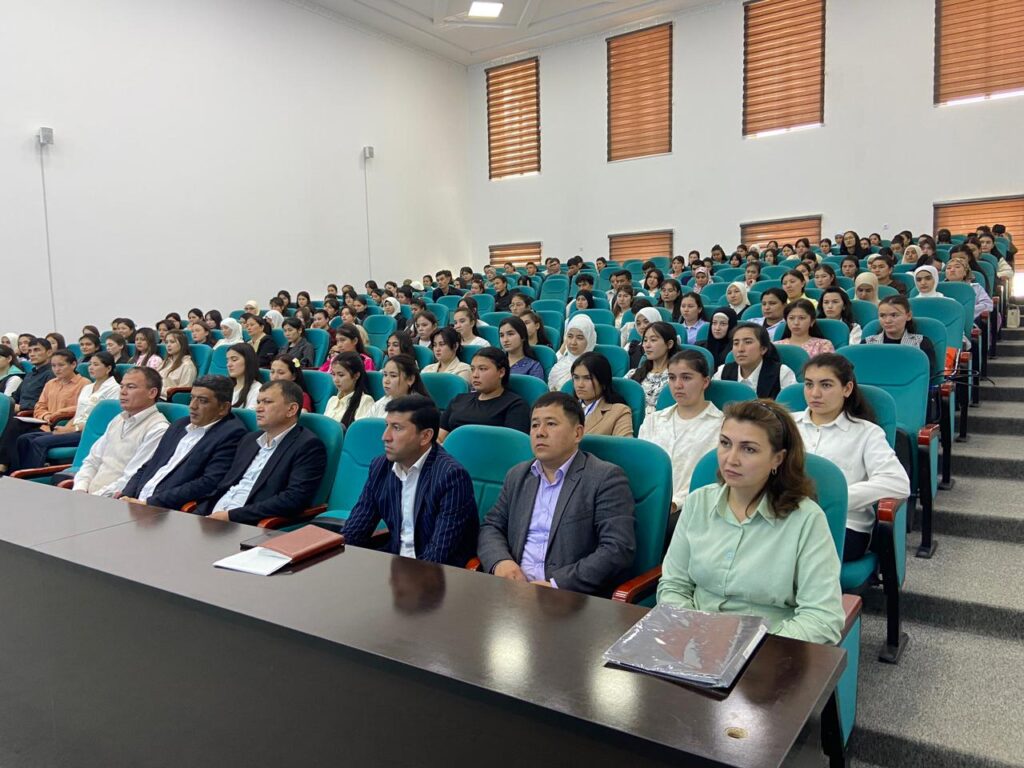
The discussion went beyond academic cooperation. It addressed broader and more pressing aspects—ranging from university governance and human resource development to the relevance of engineering fields in responding to industrial needs. These issues are increasingly important as higher education institutions are expected to be more adaptive and competitive.
The event also reflected how the collaboration between UMG and KSPI is moving toward a more practical level. It is no longer limited to formal agreements, but is now taking shape through real academic discussions, exchange of ideas, and cross-institutional perspectives.
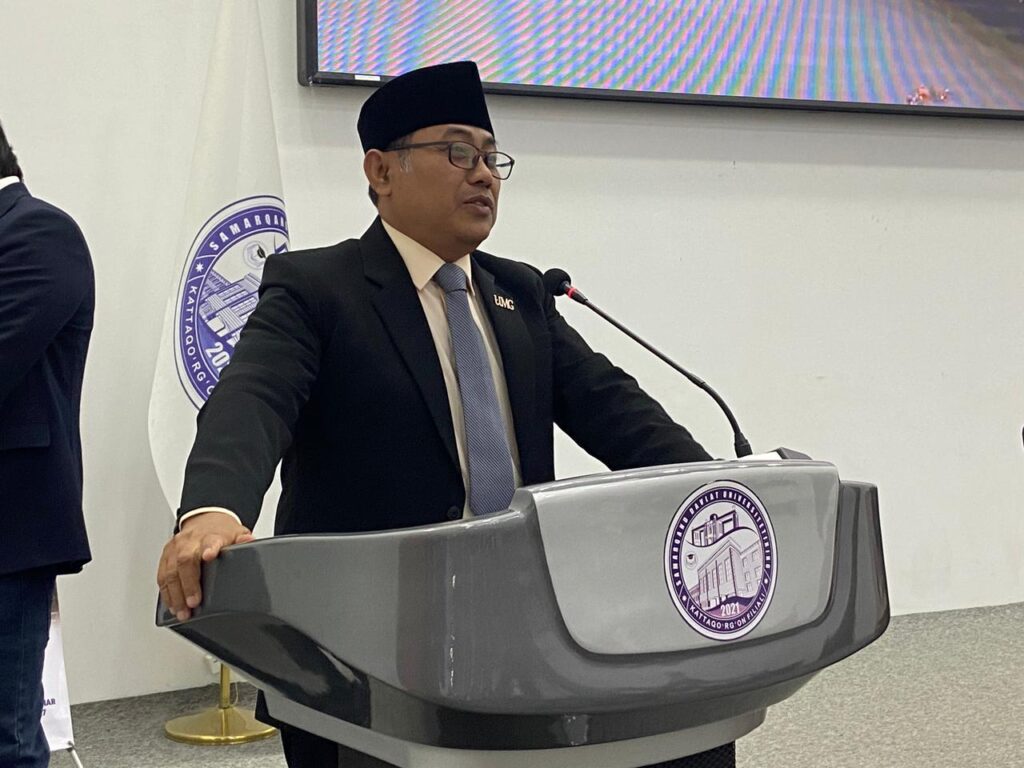
UMG Rector, Prof. Dr. Khoirul Anwar, opened the discussion by pointing out a key challenge: universities can no longer rely on conventional approaches. “If universities only run as usual, the results will also remain ordinary. What we need now is the ability to manage quality and adapt to change,” he stated.
He emphasized that forums like this are not only about sharing, but also about reflecting on how institutions operate.
“Through discussions like this, we can learn from each other—observe good practices and adapt them to our own context,” he added.
From an institutional perspective, Dr. Tumirin, Vice Rector II of UMG, highlighted the central role of human resources in shaping a university’s competitiveness. “At the core, a strong university depends on its people. When lecturers and staff continue to develop, the institution will grow as well,” he explained.
He stressed that human resource development should not be treated as an additional program, but as a core strategy in building academic quality.
Meanwhile, Paulina, M.Pd., Head of the International Affairs Office of UMG, offered a broader view on internationalization. “Internationalization is often seen as student exchange. But more importantly, it is about building knowledge connections and sharing ways of thinking,” she noted.
According to her, forums like this are essential because they bring together different approaches and open opportunities for sustainable collaboration.
“When communication between institutions is strong, collaboration can expand into many areas—research, academic programs, and even system development,” she added.
From a more applied perspective, Moh. Zainuddin, ST., MT. from UMG’s Industrial Engineering, connected the discussion to real industrial needs, particularly by referring to Gresik as a major industrial area in East Java. “Universities cannot stand alone. The knowledge we develop must be relevant to real-world needs,” he stated.
He also pointed out that international exposure like this broadens perspectives, especially in shaping engineering education to be more adaptive and aligned with current demands.
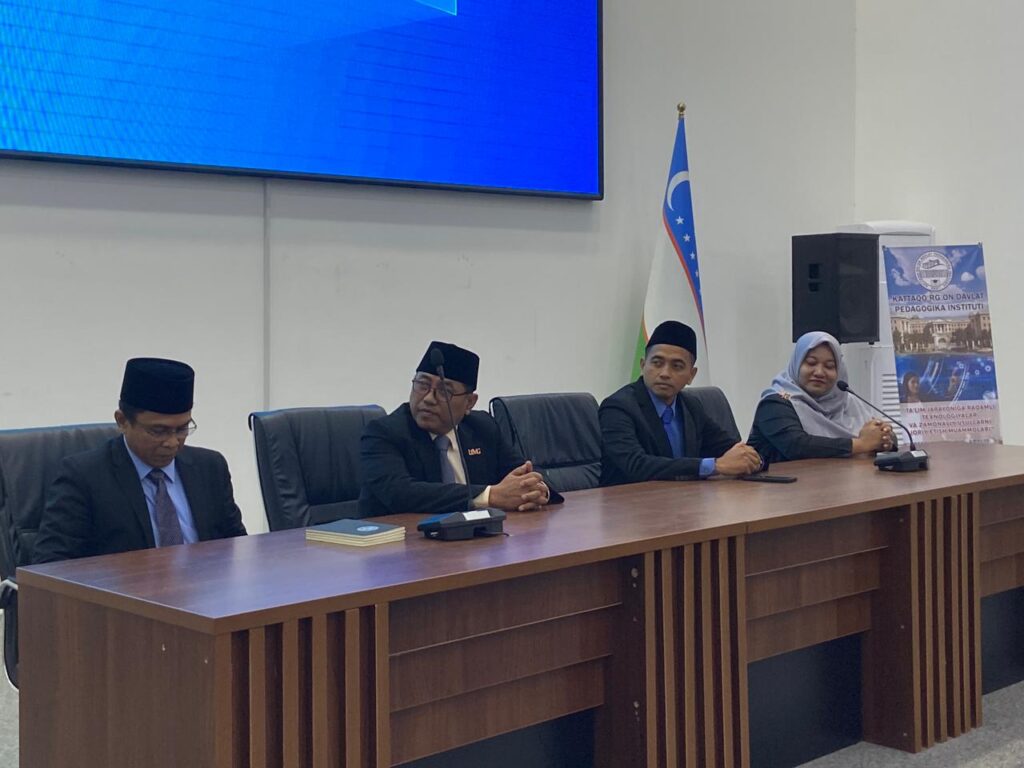
Throughout the seminar, the discussion remained dynamic. It was not just about delivering presentations, but also about exchanging perspectives that made the forum more engaging. Differences in background became a strength, allowing participants to see issues from a wider point of view.
From Kattakurgan, Uzbekistan, one message stood out clearly: international collaboration should not stop at formal agreements—it must be implemented, experienced, and bring real impact.
Through this seminar, Universitas Muhammadiyah Gresik and Kattakurgan State Pedagogical Institute demonstrated that collaboration is not just a program, but an ongoing process—one that moves toward building more adaptive, competitive, and globally relevant universities.