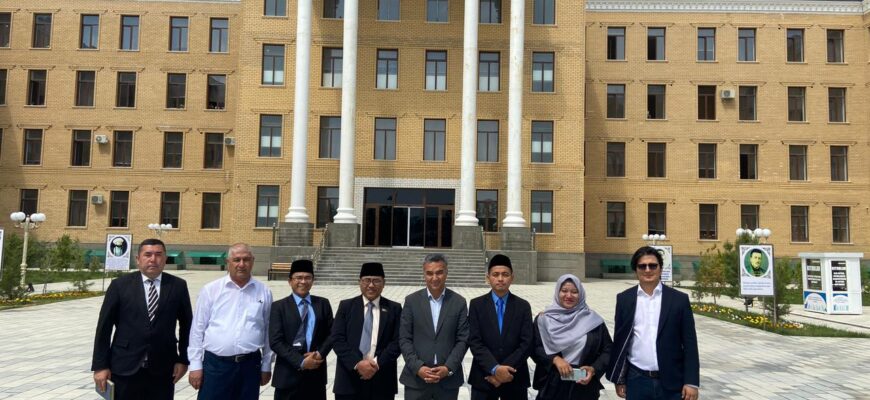
KATTAKURGAN, April 27, 2026 — Academic collaboration is no longer defined by distance, but by direction and shared goals. This momentum is clearly reflected in the partnership between Universitas Muhammadiyah Gresik (UMG) and Kattakurgan State Pedagogical Institute, which has now entered a more concrete phase of implementation, moving beyond “sekadar kesepakatan administratif” toward real academic action.
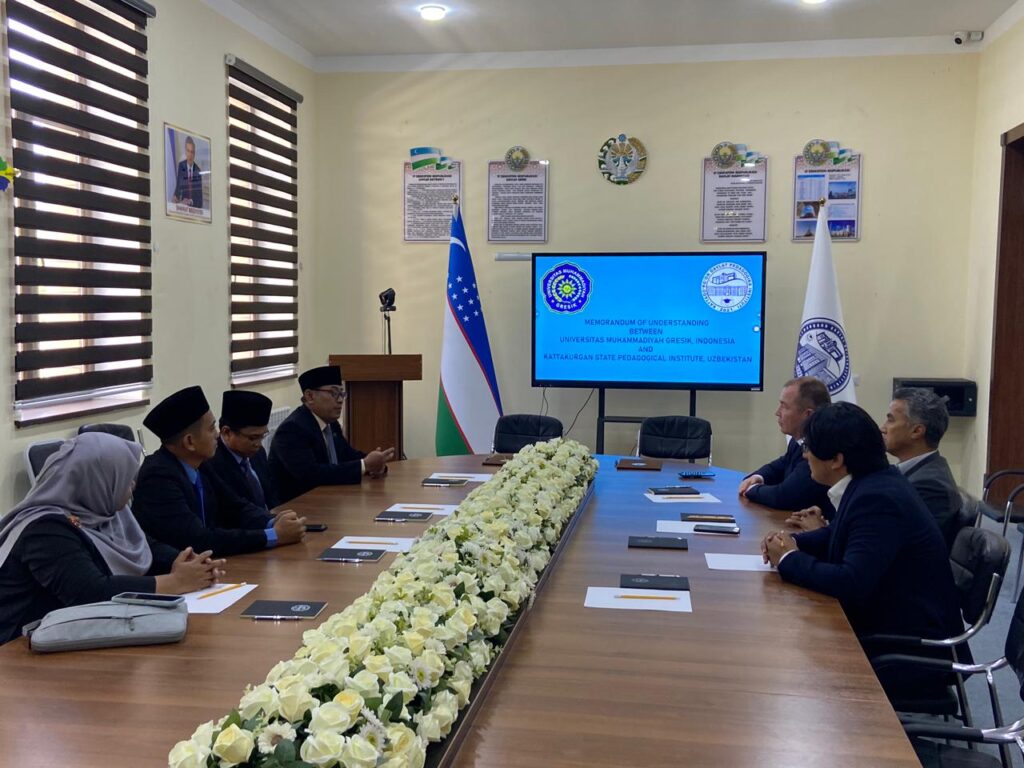
This collaboration is realized through a series of strategic programs designed to respond to global academic needs. As highlighted by the institutions, the cooperation is “not only about document exchange or institutional visits, but about mutual learning, resource sharing, and creating real benefits for students, lecturers, and society.”
The scope of cooperation includes strengthening teaching practices, student and lecturer exchanges, international internship programs, scientific publication collaboration, and global community engagement. In addition, the library resource sharing initiative becomes a key pillar in expanding access to “cross-border knowledge resources that are broader and of higher quality.”
From the Uzbek side, Dr. Sherzod Urakov Rakhmonovich, Rector of Kattakurgan State Pedagogical Institute, emphasized that this implementation is an important step in strengthening academic relations between Uzbekistan and Indonesia. He stated that the collaboration reflects a shared vision in developing globally adaptive higher education. “This collaboration is not only about exchanging documents or institutional visits, but about how both universities can learn from each other, share resources, and create real benefits for students, lecturers, and society,” he stated.
Adding the academic perspective, Dr. Sirojiddinov Fazliddin Nasriddinovich, Vice Rector of Academic Affairs, noted that teaching development, lecturer exchange, and joint publications play a crucial role in improving academic quality. He highlighted that the program opens opportunities for cross-country academic perspectives, especially in teaching methods and research collaboration. “This implementation runs well because both parties share a clear commitment. We see great potential for developing collaborative classes, academic exchanges, and joint publications that contribute to knowledge development,” he said.
Meanwhile, Mirjalol Kudratov, Head of the International Office of Kattakurgan State Pedagogical Institute, emphasized the importance of structured coordination in ensuring the success of international programs. “Our role is to ensure that every agenda is systematically implemented, from student and lecturer exchange to library access and international community service programs,” he explained.
From Universitas Muhammadiyah Gresik, Prof. Dr. Khoirul Anwar, Rector of UMG, stated that this partnership aligns with the university’s strategy to strengthen international recognition and improve the quality of the Tridharma of Higher Education. “We see this collaboration as an important opportunity to strengthen teaching, research, publication, and community service in an international context,” he said.
Supporting this view, Dr. Tumirin, Vice Rector II of UMG, emphasized the importance of sustainability and real impact in international cooperation. “International collaboration should not stop at ceremonial activities. Programs must be well-planned to produce real and measurable outcomes,” he stated.
Furthermore, Paulina, M.Pd., Head of the International Office of UMG, highlighted the importance of coordination between both institutions in ensuring effective program implementation. “This collaboration works well because of open communication and strong commitment from both sides,” she said.
From the academic field, Moh. Zainuddin, ST., M.MT., representative of the Industrial Engineering Study Program, emphasized the relevance of international collaboration for applied science development. “Students need global exposure, adaptability, and cross-cultural experience. Internship and publication collaboration are important pathways to develop these competencies,” he explained.
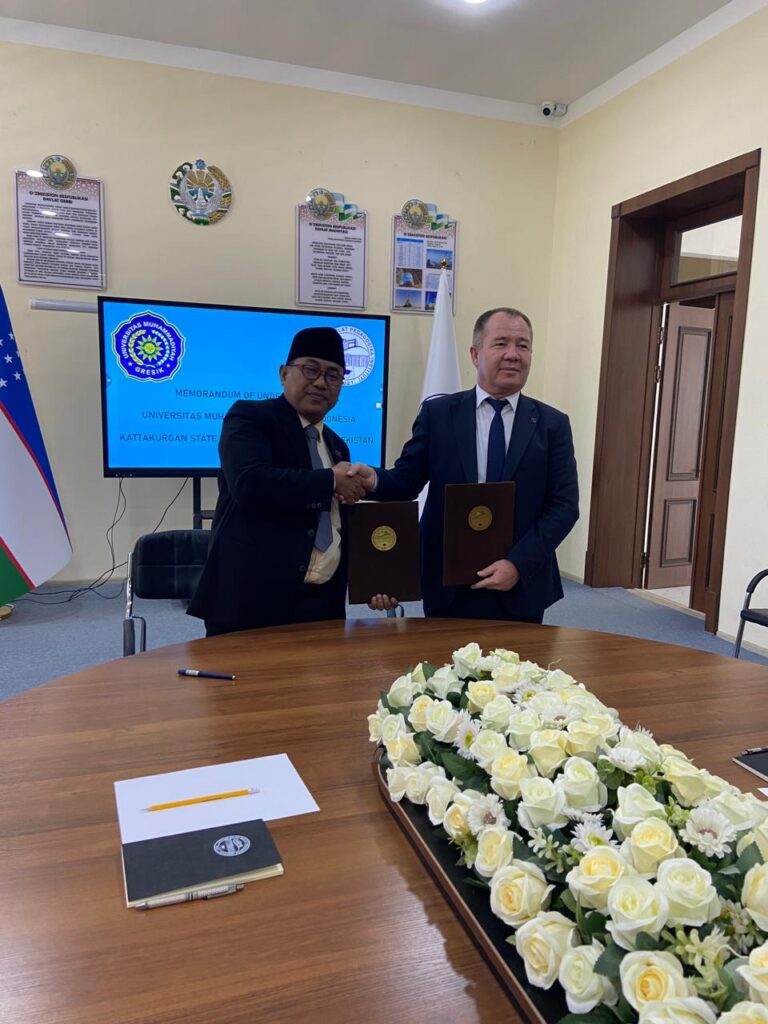
The implementation of this collaboration between Universitas Muhammadiyah Gresik and Kattakurgan State Pedagogical Institute reinforces that internationalization in higher education is not only measured by the number of partnerships, but by how far those partnerships can be translated into “tangible, impactful, and sustainable academic programs” that deliver real global value.